
Renovating a house in a Cornish seaside town is rarely simple. The streets are narrow, the parking is tight, and the house itself is usually full of furniture that has to go somewhere before a single wall comes down. That was the situation on a recent clearance and storage St Ives job we took on: the property sits up a steep hill on streets where you simply cannot park a big van outside, half the kitchen was already sitting out on the back terrace in pieces, the bedrooms were still made up with beds and mattresses, and the builders were waiting for the rooms to be emptied so they could get on. In the end it took three fully packed van trips. We cleared the construction waste for licensed disposal, stripped the rooms back, and took everything the owner wanted to keep into our storage until the work was finished.
What the property looked like when we arrived
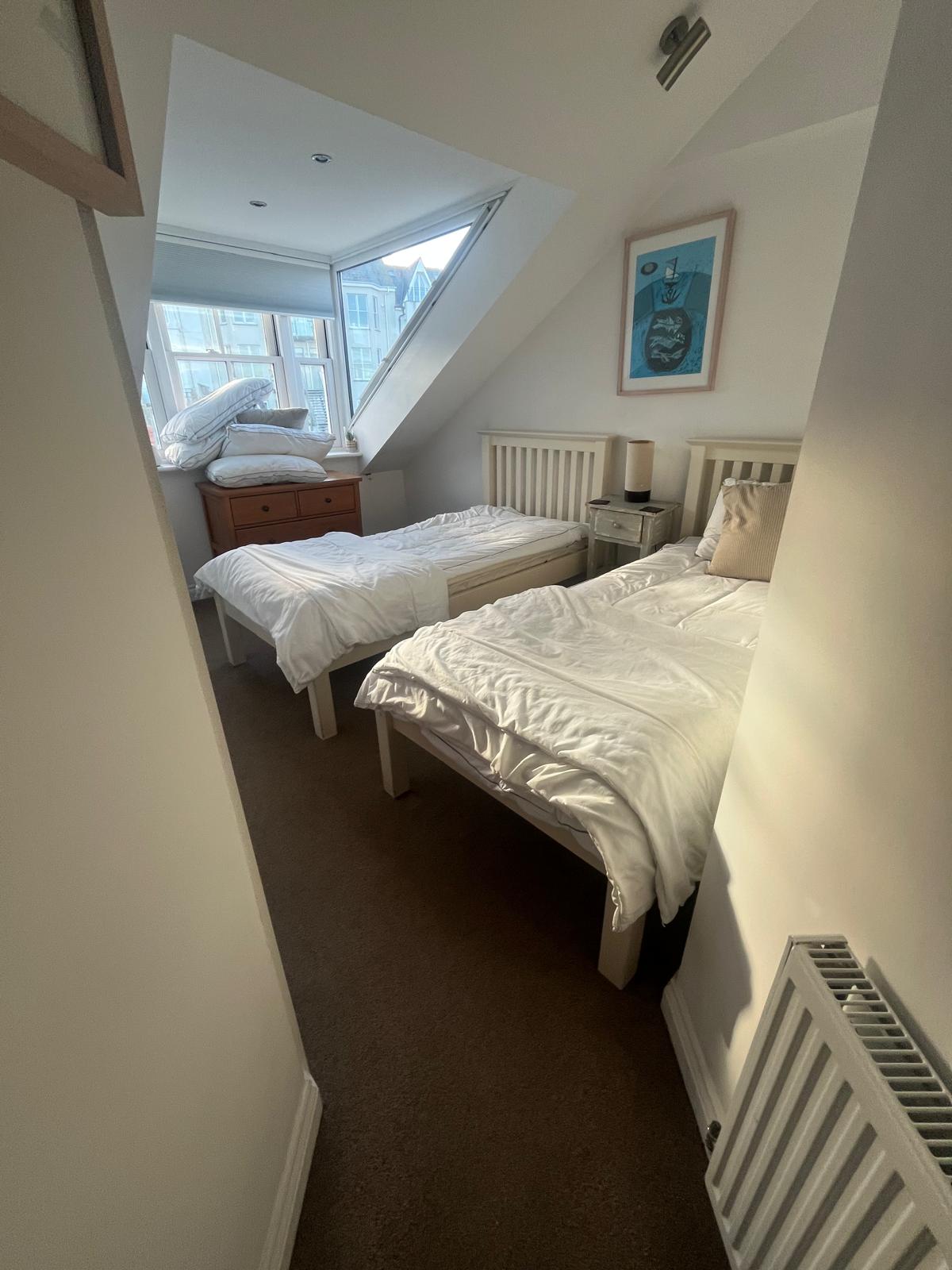
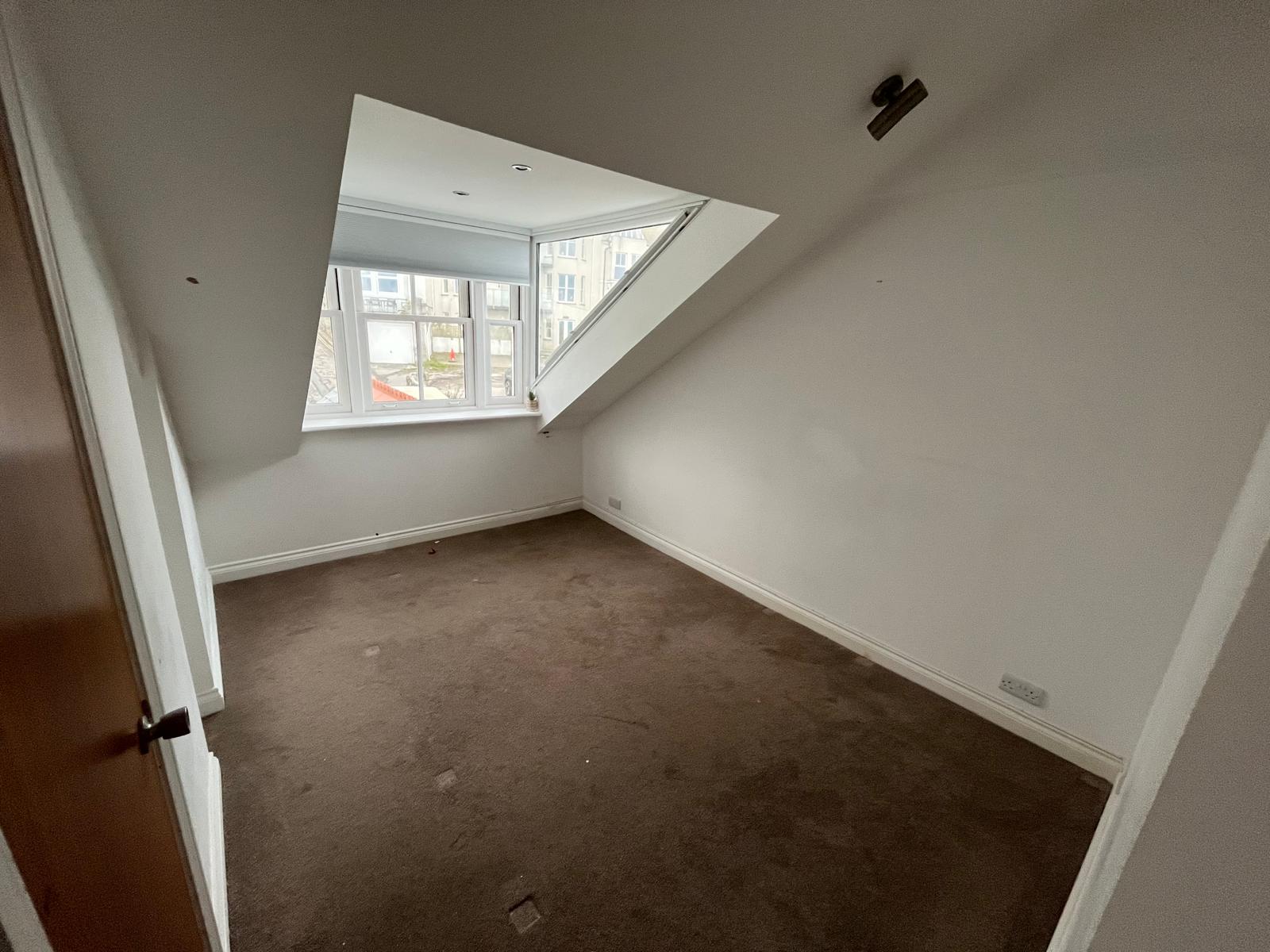
Upstairs, the loft bedroom was still fully furnished: twin beds, mattresses, bedding, a chest of drawers under the dormer window, bedside tables, framed prints on the walls. A room that looks ready for guests, but not a room a plasterer can work in.
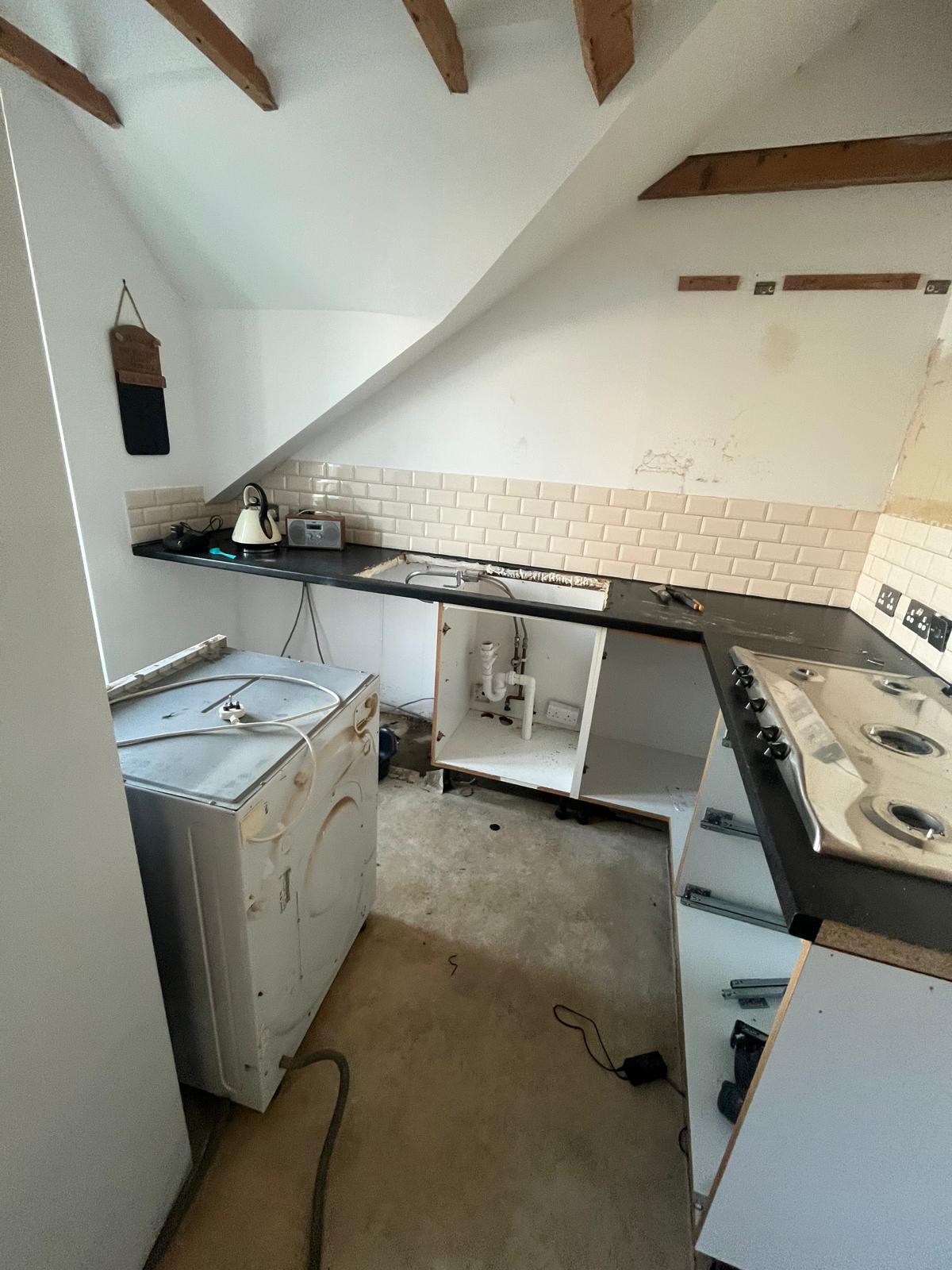
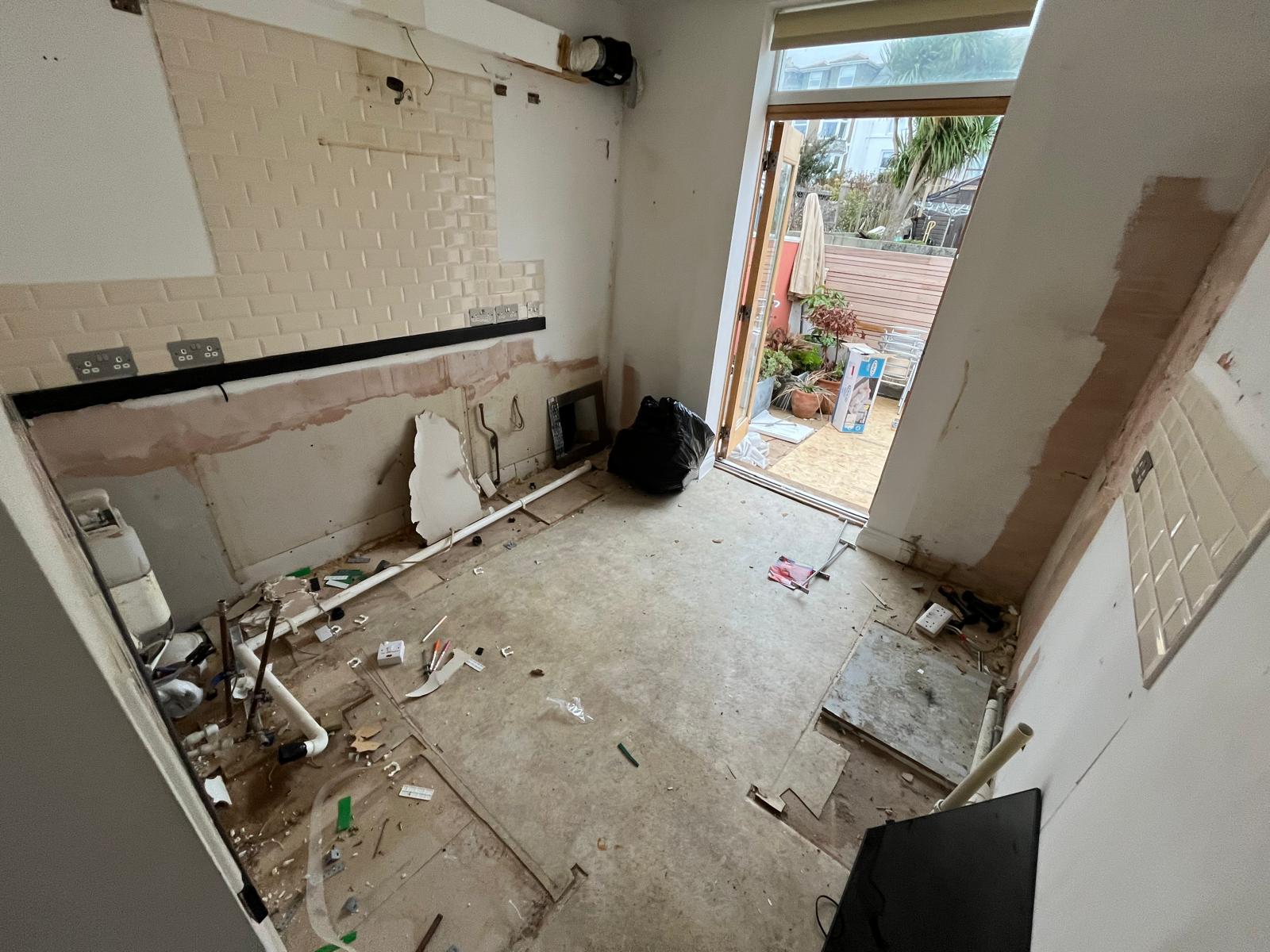
Downstairs was a different story. The kitchen had been partly ripped out already: worktop still in place but the sink gone, cupboard carcasses open, a washing machine pulled out and sat on the floor with its cable trailing, an old hob stranded on a run of units. The rear room was back to bare floorboards and patched plaster, with pipework, offcuts and fixings scattered across the floor.
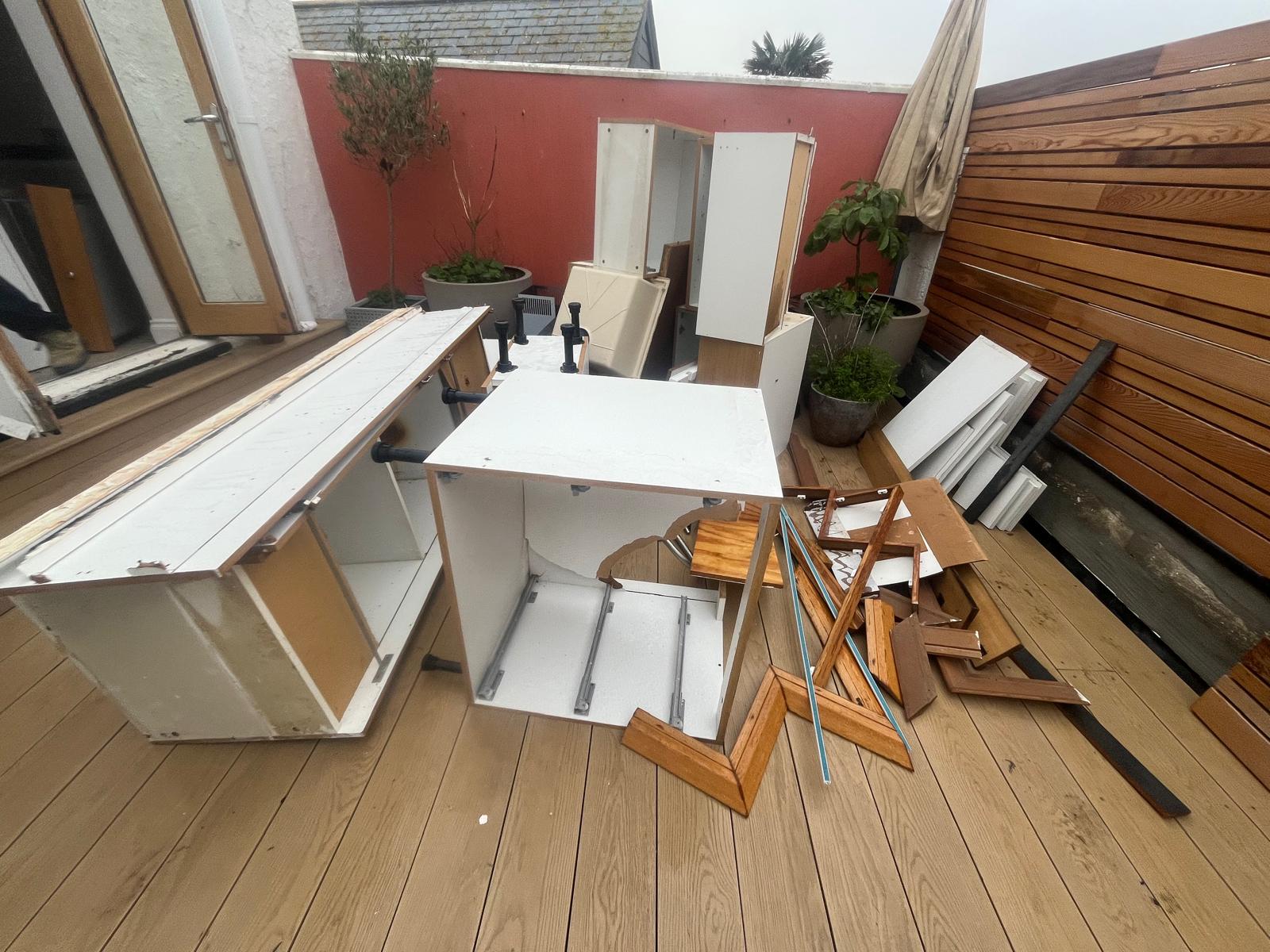
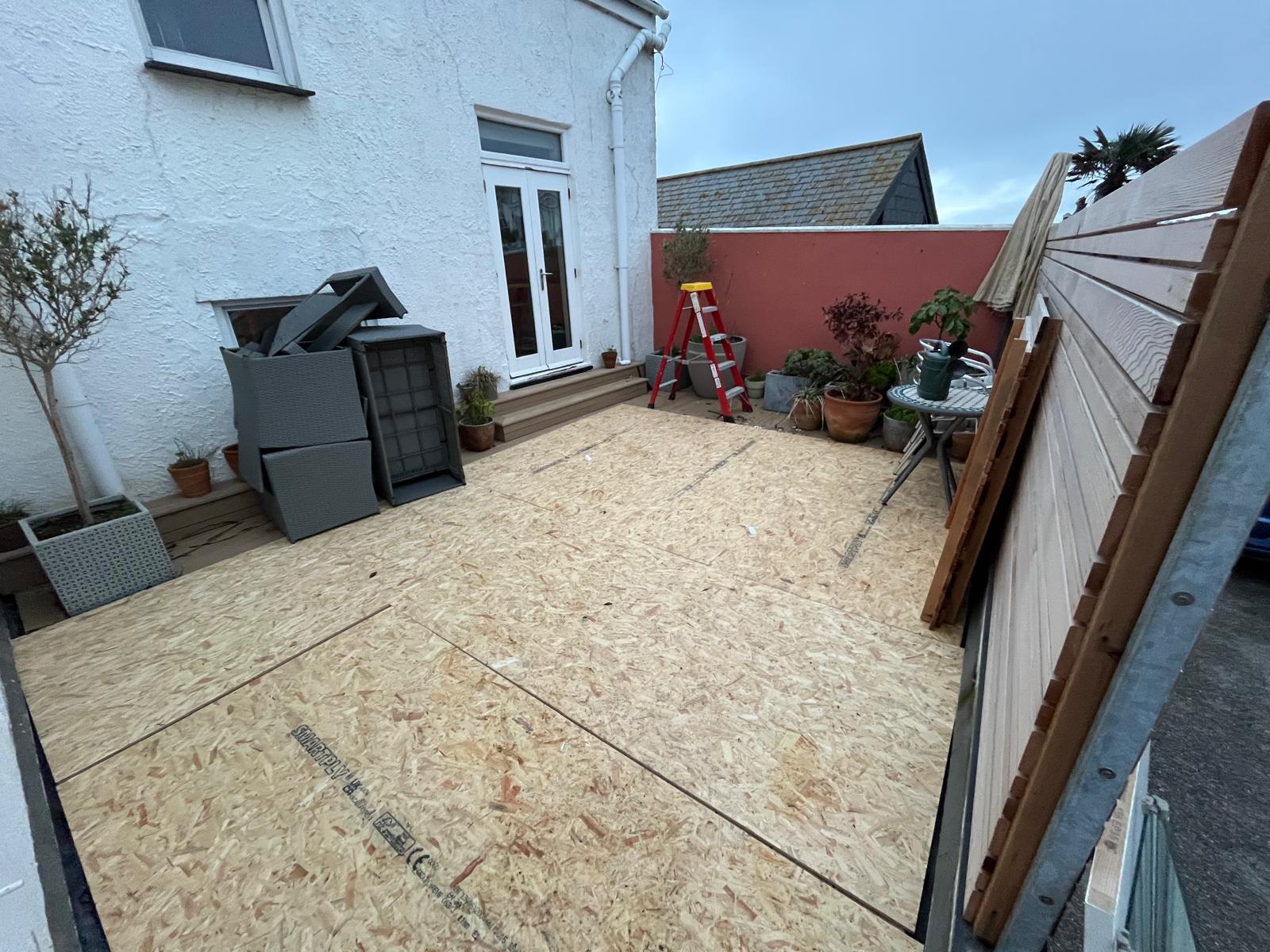
Outside on the terrace, the units themselves were stacked up along with cupboard doors, worktop sections, shelving, curtain poles and old picture frames. It is the kind of pile that is easy to create and very hard to shift without a van and a licence.
Two different jobs on one day
This kind of property needs two things sorted at once, and they pull in opposite directions. The construction waste has to leave and never come back: MDF carcasses, chipboard worktop, broken tiles, pipe, timber and bagged rubble. That goes out for licensed disposal, with the paperwork to prove where it went. The furniture is the opposite problem. Beds, mattresses, wardrobes, sofas and chests of drawers are not rubbish. They are the owner's things, and they need to survive several months of dust and scaffolding and then come back in one piece.
If you split those two tasks between a skip hire firm, a man with a van and a self storage unit, you end up project managing three sets of people around a builder's schedule. We handle both sides in one go. One team and one point of contact, from the first load to the last. On this job we sorted as we loaded: waste to one vehicle, keepers wrapped and loaded for storage.
Access in a town like St Ives
Anyone who has tried to park a van in St Ives knows the real work starts before you lift anything. This house is up a steep hill, the road is single width with double yellows on both sides, the terrace sits above street level and there is a tight gate at the side of the house. There was nowhere to stand a large van outside the door, so everything came out in stages: carried down to where we could safely pull in, loaded, driven out, and back again. Three full van loads in total, which is slower than a drive to the door but a lot less damaging than trying to force the issue.
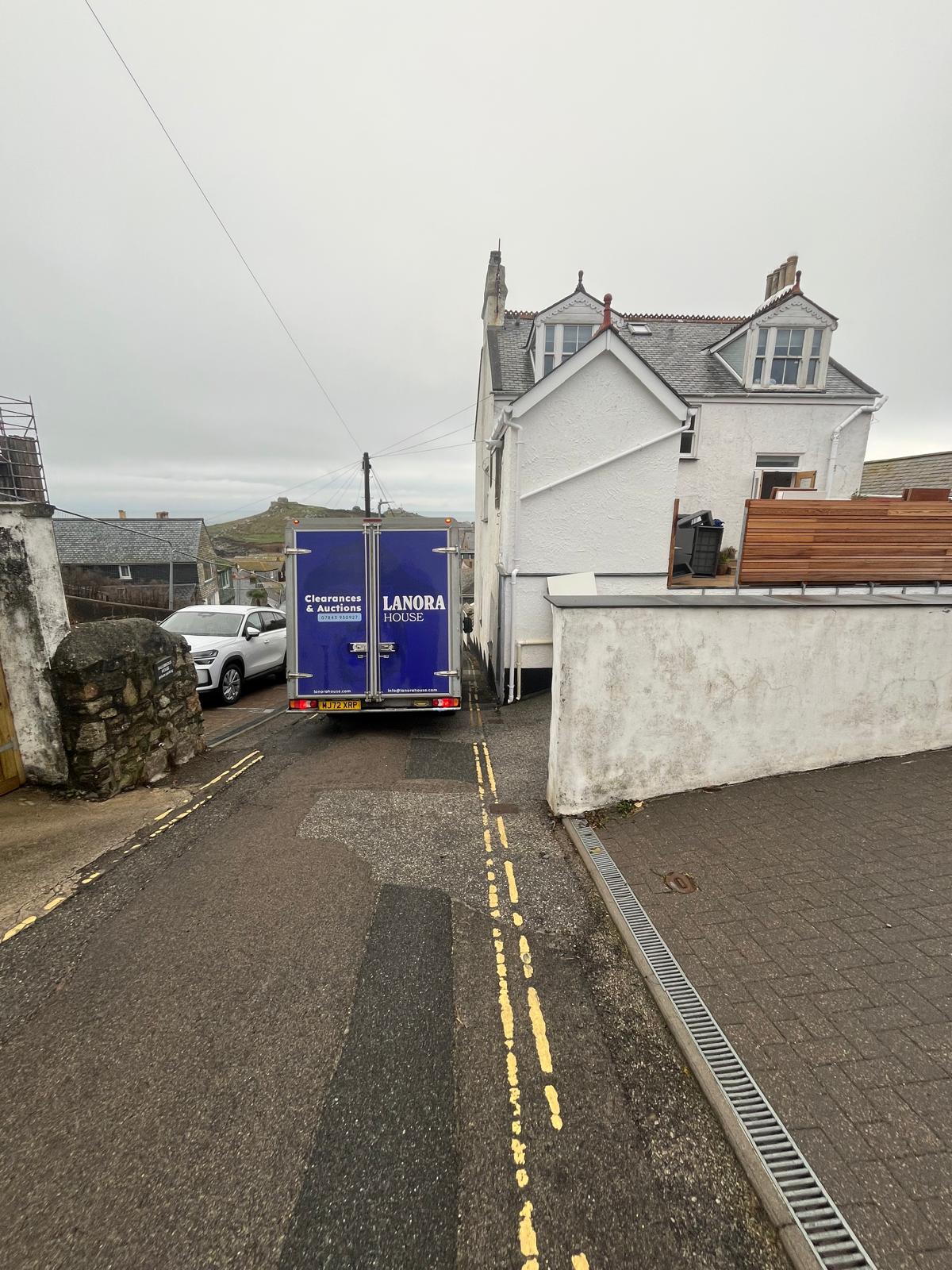
It is worth saying plainly: some clearance companies will not take St Ives jobs at all because of the access. If you have rung round and been turned down, or had someone agree over the phone and then back out when they saw the hill, that is why. We are used to it. Narrow lanes, steep hills, no parking and stairs are normal on this side of Cornwall, and we plan the job around them rather than pretending they are not there.
Why we always view before quoting
Access is the single biggest thing that changes how long a clearance takes, and the time on site decides the price. That is why we always come out and look at a property first. On the visit we work out where the van can stand, whether we need a permit or a short suspension, how many trips the load is likely to be, how many stairs are involved and whether a bed will come down the loft staircase without being taken apart.
Once we have seen all that, the quote we give you is the price you pay. No adjustment halfway through the morning because the van could not get up the hill, no extra charge for a second or third trip we should have allowed for. The visit is free and there is no obligation at the end of it, so the only thing it costs you is half an hour. It is also why we will not quote blind over the phone for a town like St Ives.
How storage protects your furniture
Once the rooms were stripped, the terrace was clear enough for the builders to board out and keep working, and the owner's furniture was on its way to our storage. Items go in wrapped, mattresses bagged, soft furnishings covered, and everything is logged so we know what we have and where it sits. It is dry, secure and indoors, and nothing moves until the owner says so.
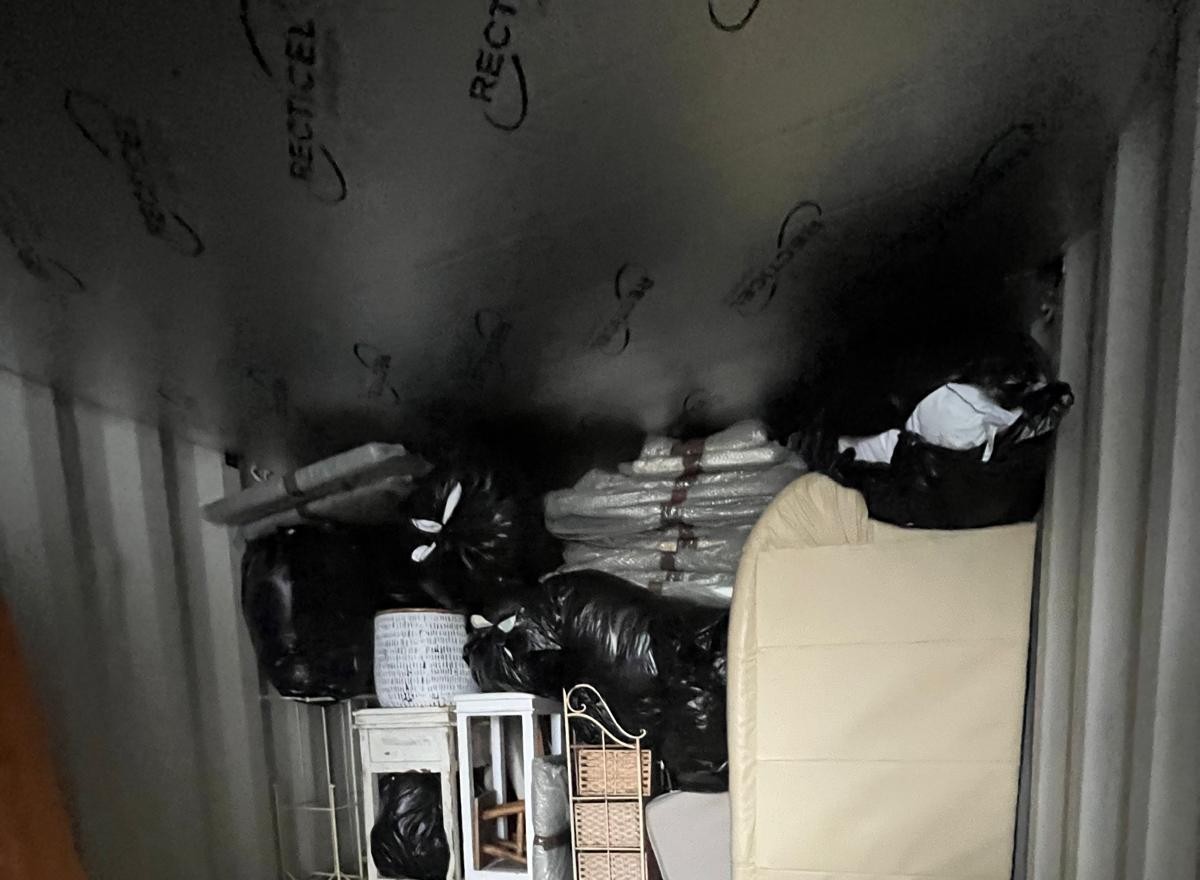
When the renovation is finished, we bring it back. Same team, same van, straight into the rooms it came from. The owner never has to hire a second firm, chase a storage contract or spend a Saturday ferrying mattresses across Cornwall in a hire van. If something turns out not to be wanted after all once the new kitchen is in, we can take it through our own auctions and resale channels rather than straight to the tip.
We do this regularly for renovations, probate sales and house moves across West Cornwall, and the pattern is nearly always the same: keep a little, clear a lot, store the rest until the dust settles.
What the customer said
"Great service, house was cleared efficiently and it’s great to know the items will be disposed of or rehomed appropriately. Fab communications. Thanks"
Lesley Jones, ★★★★★ Google review
Planning a renovation clearance?
If you have a property part way through building work, or one you are about to start on, we are happy to come and look, however awkward the street. Every job is different and the only honest way to price it is to see the access, the volume and what is staying. Call Lanora House on 07843 930927 or email info@lanorahouse.com for a free, no-obligation quote.