
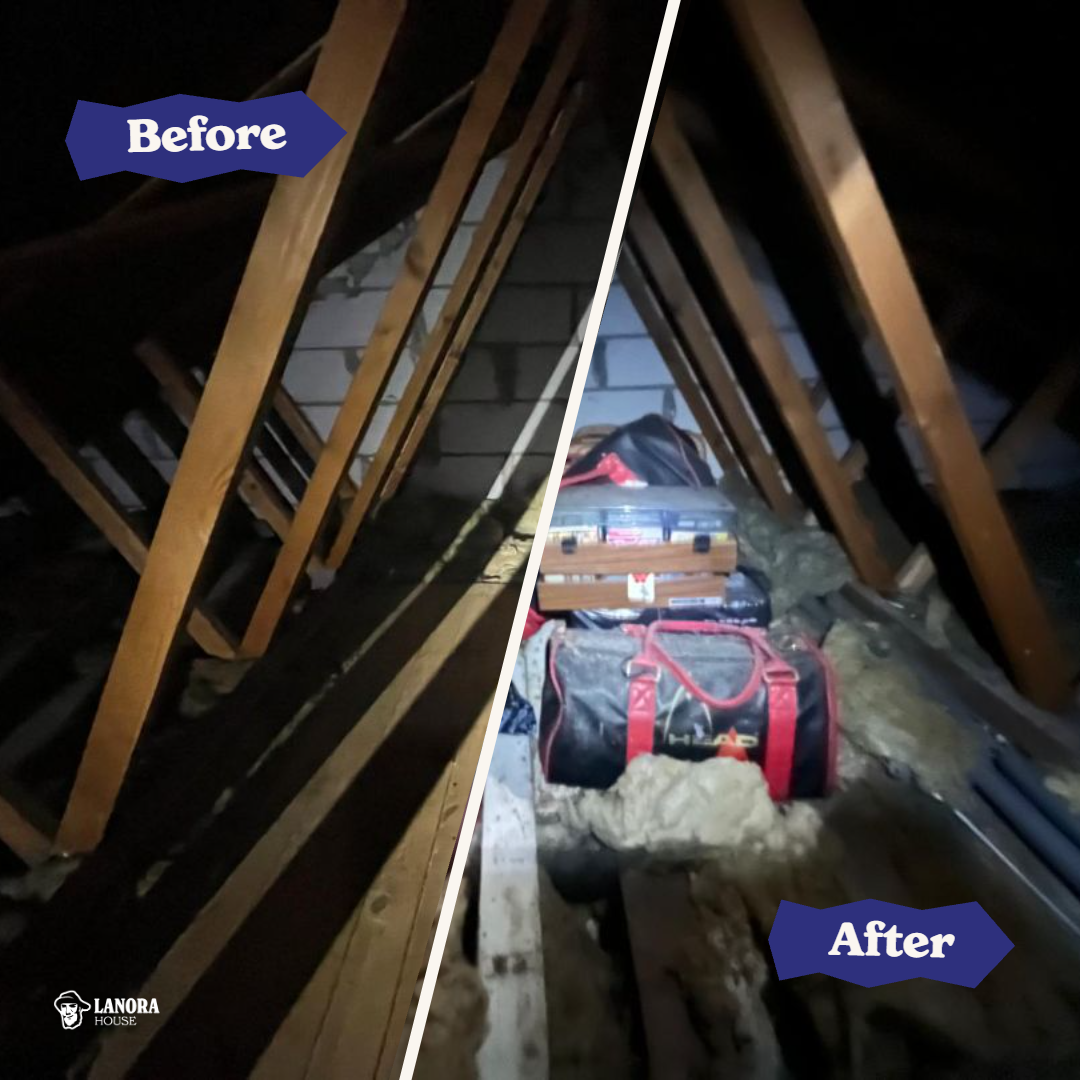
Attic or loft, it is the same space and the same job. A clearance means a team turns up, empties it, and takes the lot away with them. Most people who ring us about a loft have not been up there for years. A fair few have never been up at all, because the house came with whatever the last owner left behind, and nobody has felt like finding out. That is normal, and you do not need to know what is up there before you book. We cover Cornwall and the wider South West from our base in Hayle, and the loft is very often the last thing left in a probate clearance or a house sale.
You do not have to climb the ladder
Tell us where the hatch is and we will go up with a torch and a camera. You get photographs of the whole space before anything is moved, so you can see what is actually there and tell us what comes down and what stays.
It matters more than it sounds. Lofts are pitch black and a phone torch shows you about a square metre at a time. People picture six boxes and find twenty, plus an old cot, a stack of suitcases and a water tank ringed with bags that split the moment you lift them. The loft in the photographs below is a good example: holdalls, hard suitcases, an old stereo, a first aid tin and a leather bag, all sitting straight on top of the insulation and running back into the dark towards the gable wall.
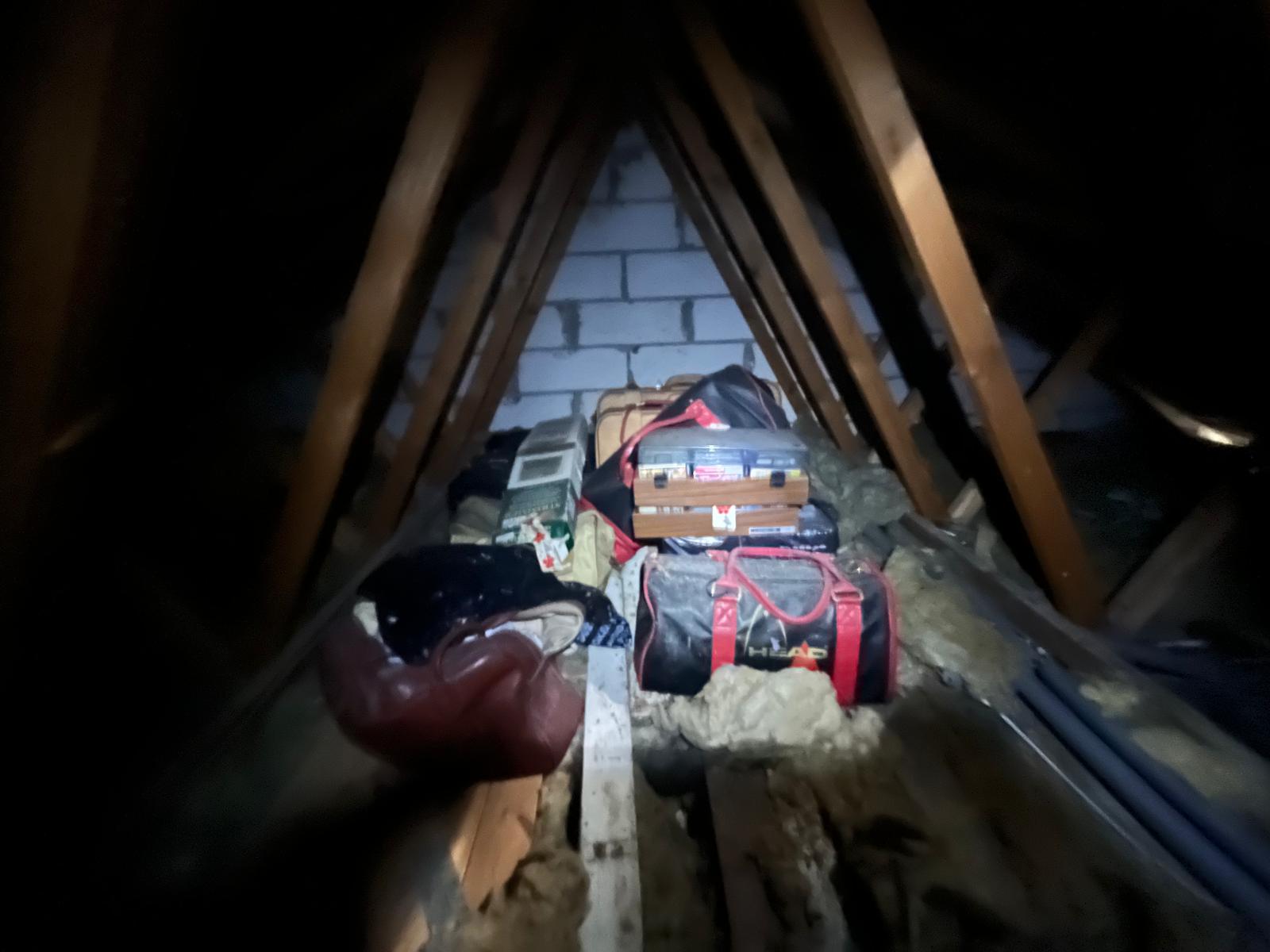
The photographs are also the easiest way to handle a clearance you are doing on someone else's behalf. If you are sorting a parent's house from the other end of the country, or you are an executor dealing with probate, you can look through the pictures and point at what you want kept rather than trying to guess.
Why lofts catch people out
Nearly every loft injury comes from the same short list of things. The floor is not a floor. Between the joists there is plasterboard, and it holds nothing, so one misplaced foot puts a leg through the ceiling below. Joists sit roughly 400mm apart and they are not always where the insulation suggests. Headroom runs out fast near the eaves, and there are usually nails through the felt at head height.
Then there is what you are carrying. Coming down a loft ladder backwards with a box you cannot see over is how people break ankles. Old glass fibre itches for days, and the dust in a loft that has been shut up for twenty years is mostly mouse droppings, bird mess and rotted cardboard. We have opened hatches onto live wasp nests more than once.
None of that is a reason to panic about your own loft. It is the reason we send two people, bring masks and boards, work off the joists, and never ask a customer to help pass things down.
Old insulation and asbestos
Insulation is the part people forget until the team is halfway through. Current building regulations want around 270mm of mineral wool. Plenty of older Cornish lofts have 100mm, squashed to about 40mm wherever boxes have been stacked on it. Compressed insulation does very little, so if the loft has been used for storage, the insulation underneath it is usually finished.
We bag and remove old insulation as part of the clearance if you want it gone. It is messy work, it comes out in sheets that crumble as you lift them, and it needs proper disposal rather than a wheelie bin. If it has been soaked by a leak or a rodent has been living in it, it has to go regardless of its age. What we leave behind is a clean deck, ready for new material to be laid.
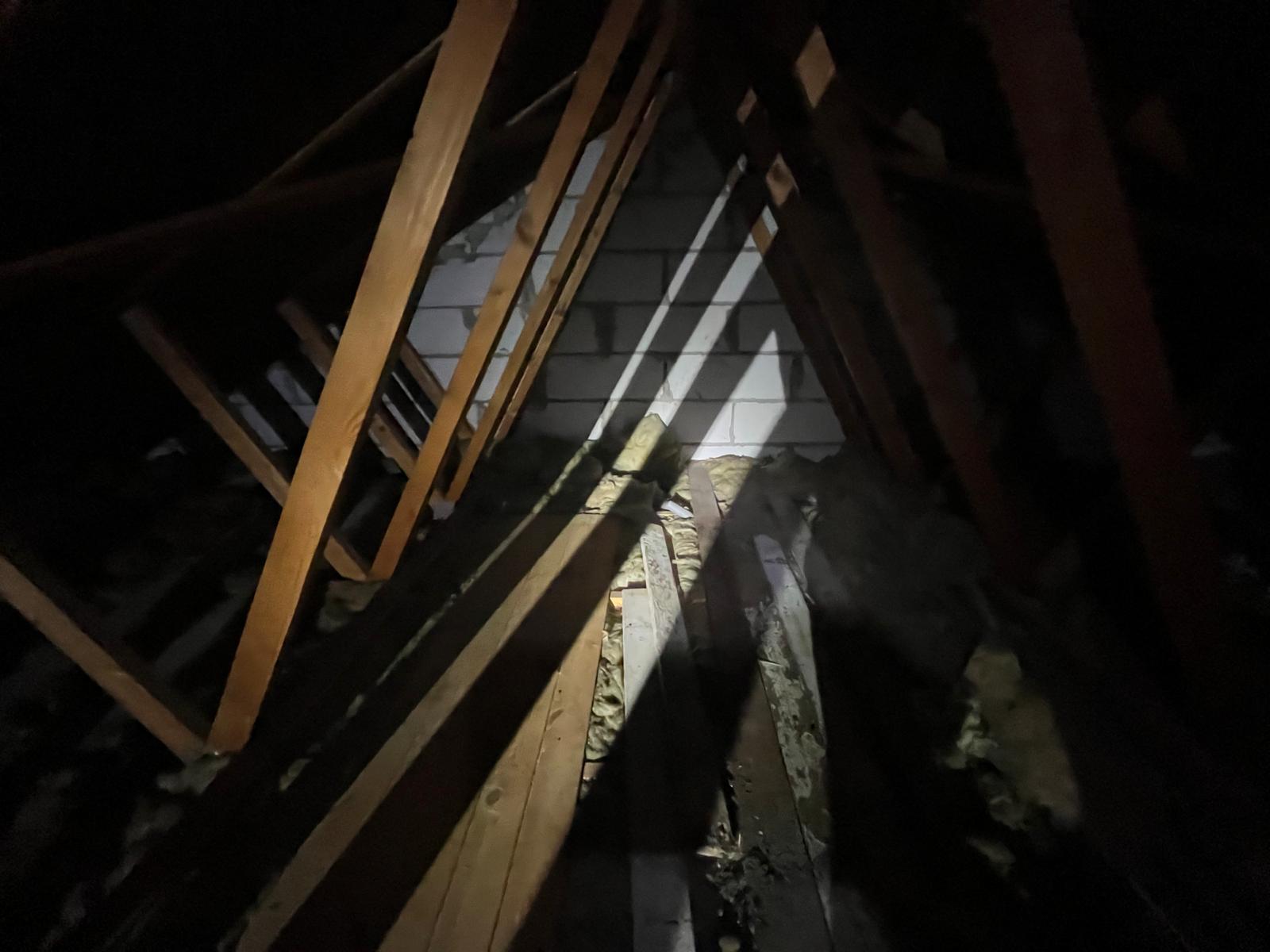
One exception. If we think there is asbestos, in old pipe lagging, boarding around a water tank, or the loose grey insulation used in some pre 1980s houses, we stop and tell you. Nobody should disturb it, us included. It needs testing and a licensed removal contractor, and we will say so rather than shift it and hope.
What happens on the day
We agree a date once you have accepted the quote and arrive in the slot you booked. The team goes up through the existing hatch and ladder, brings everything down and out, and sorts it at ground level for resale, donation, recycling or disposal. Nothing needs bagging or sorting beforehand. Sorting at height in the dark is the slow, risky way to do it.
Everyone who comes into your house is DBS checked, and you are welcome to ask on the day. A loft clearance means letting two people into the most private part of the house and then leaving them to it, and if you are arranging this for an elderly parent or as an executor with a duty to the estate, that tends to be the question that matters most. We are a licensed waste carrier, so you get a waste transfer note if you need one for an estate or a landlord file. That is the bit people skip when they weigh up doing it themselves: repeat trips to the tip in a car boot, or a skip on the drive on top of all the work.
Questions we get asked most
- Can you quote if I cannot get into the loft? Yes. That is what the photographs are for.
- What if I want to keep some of it? Tell us which items and we will bring them down and leave them where you want them. Most people keep photo albums, paperwork and tools, and let the rest go.
- What happens to my things? Anything with a bit of life left in it goes to charity or through our own auctions and resale channels. The rest is recycled where possible, and the remainder goes to a licensed transfer station.
- There is a bird or wasp nest up there. Tell us before the day. An active wasp nest needs treating first. An old empty one is just more waste.
- Do I have to be home? Someone needs to let us in and be there while we work. Beyond that, carry on with your day. There is no need to stand at the bottom of the ladder.
- Is the ceiling at risk? Only if someone walks between the joists. Our teams board out as they move, which is exactly the part that goes wrong when a loft is tackled in trainers on a Saturday afternoon.
We price on the load: how much is up there, how heavy it is, and how awkward the access is. The job decides the price, and a free visit is the only honest way to be accurate. If you want to know what is actually in your loft before you commit to anything, we will go up and photograph it for you. Call Lanora House on 07843 930927 or email info@lanorahouse.com for a free, no-obligation quote.