
Every November we have the same conversation. A family has inherited a house, or a landlord has a property between tenants, and there is no particular rush. Christmas is coming. Nobody wants to spend a wet Saturday in Redruth emptying a wardrobe. Let us leave it until the spring.
We understand it completely, and if there is a good reason to wait, wait. But it is worth knowing what actually happens to a house between November and March in Cornwall, because the clearance you get in April is not the same clearance you would have got in November, and it does not cost the same either.
What a Cornish winter does to an empty house
Cornwall is mild and it is wet, and for an unoccupied building that combination is worse than a hard frost.
An occupied house is heated, and more importantly it is ventilated. Doors open, windows open, the heating cycles on and off, and moisture moves. Close it up in October with the heating off and none of that happens. Moisture comes in through the walls and up through the floors and has nowhere to go.
By March the effects are visible, and near the coast they are faster:
- Mould on soft furnishings. Mattresses, sofas, curtains, clothing left in wardrobes. Once it is in, it is in. The item is finished.
- Black mould on cold walls, usually behind wardrobes and in north-facing bedrooms, which becomes a cleaning job rather than a clearance one.
- Swollen chipboard and flat pack. Furniture that would have been resaleable in November comes apart when you lift it in April.
- Silverfish, rodents and moths. Empty warm-ish houses with soft furnishings and no people in them are very good habitat.
- Paper and photographs gone soft in a cold room. This one matters more than the furniture, because it is the part nobody can replace.
How this shows up in the price
Our quotes come down to two things: how many van loads it takes, and what the waste site charges us. A winter empty house makes the second one worse.
Anything mouldy or damp cannot be resold, cannot go to a charity, and in most cases cannot be recycled either. It goes in the general load. So the proportion of a house that gets tipped rises, the disposal bill rises, and because the value recovered from resale is what we set against your clearance cost, the offset falls at the same time.
Both halves of the calculation move the wrong way. That is why the same house can cost meaningfully more to clear in April than it would have done in November, without a single extra item being in it.
The clearance of the house itself is otherwise unchanged. It is entirely about condition.
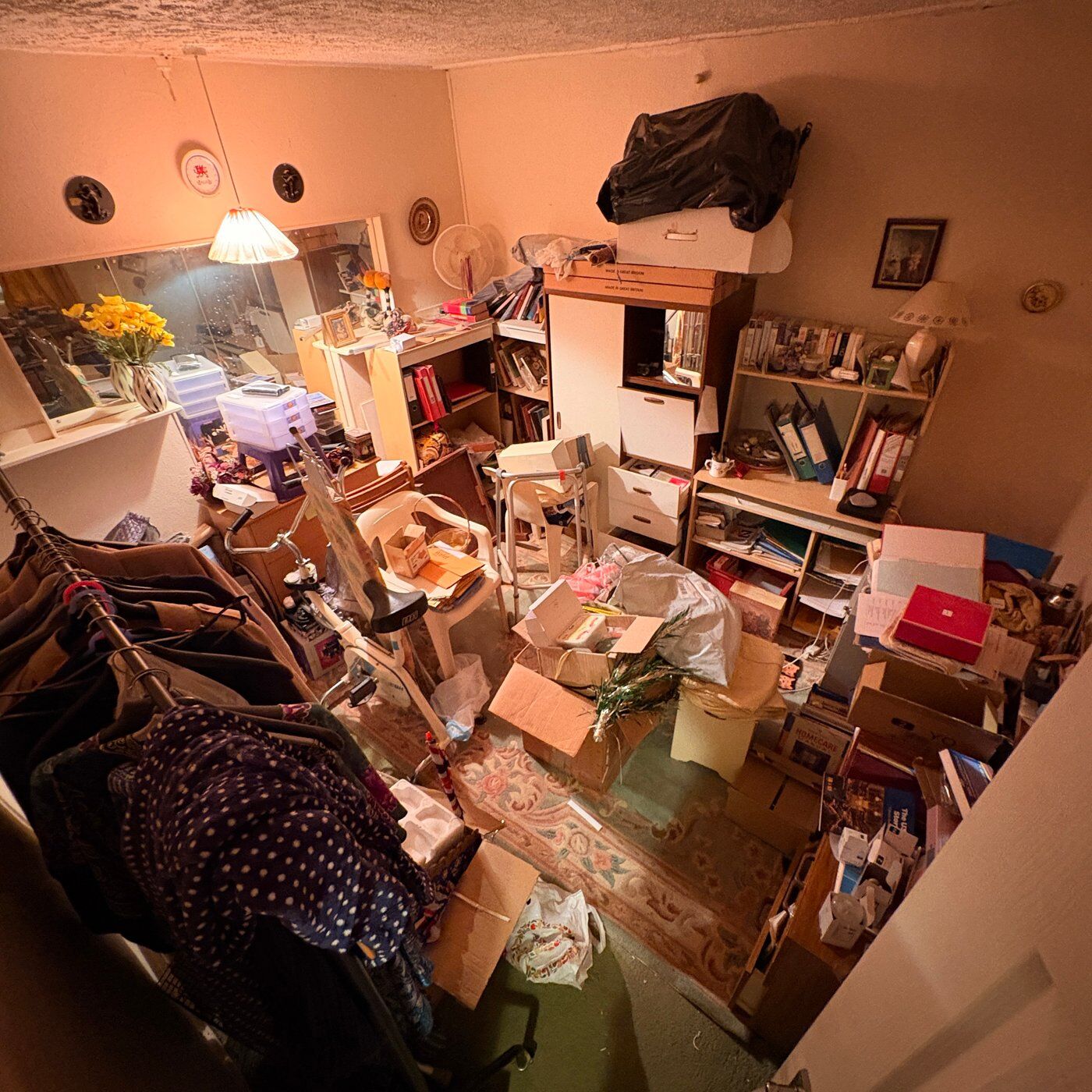
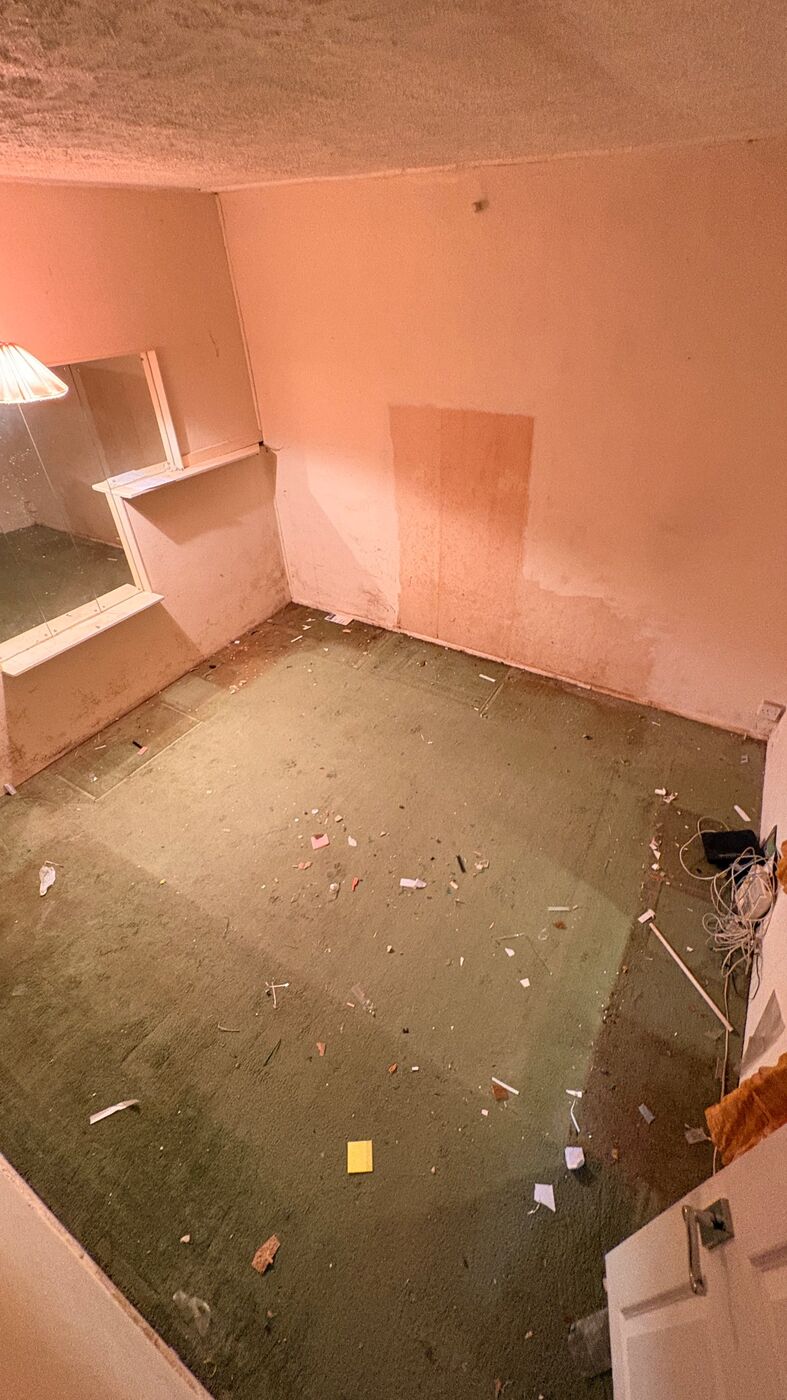
If you have to leave it standing
Sometimes waiting is unavoidable. Probate takes as long as it takes, families are spread out, and a sale can stall. If a property has to sit through the winter, a few things genuinely help.
- Tell the insurer. Most policies change once a property is unoccupied, often after 30 days. This is the important one, and it is a phone call.
- Leave the heating on low rather than off, if that is practical. A background temperature does more than anything else on this list.
- Take the paperwork and photographs out now. Do not leave them to spring. They are the only irreplaceable things in the building.
- Move soft items off outside walls and away from the floor, and leave internal doors open so air can move.
- Get anything of value out or at least photographed. An empty-looking house with a car on the drive is a target, and so is one obviously standing empty.
- Have someone look in monthly. Most winter damage in empty houses starts small and is found late, and a burst pipe found in March is a different problem from one found in a week.
The quieter argument for doing it now
There is a practical one too. Between June and September, everybody in Cornwall with a van is busy and lead times stretch. November through February is the part of the year when we can usually come out quickly and fit a job in the week you ring.
If the property is going on the market, there is a further point. Nobody views a cold house full of somebody else's furniture and sees potential. They see a project. An empty, clean property shows better in February than a full one does in May.
Voids and rentals
For landlords and agents the same logic applies with money attached, because an empty rental earns nothing while it deteriorates. Our post on void property clearance covers that side, and there is more on end of tenancy clearance too.
Getting it looked at
We cover Cornwall and into Devon from our base in Hayle, including Penzance, Truro, Bodmin, Bude and Launceston. The visit and the written quote are free and there is no obligation, and a quote in November does not commit you to clearing in November.
If you have a property standing empty, it is worth at least knowing the number. Call 07843 930927 or email info@lanorahouse.com.